While I was working on Toptal, I was slowly building my Monday.com consulting business on the side.
There weren't many Monday-related jobs on Toptal at the time, so I turned to Upwork.
That was a surreal experience — because years earlier I had worked at Upwork (back when it was still called oDesk). I was there during the merger with Elance and the rebrand to Upwork, and I left shortly after.
So in a strange way, I went from working inside the platform… to being one of the people on it.
Starting from the bottom
If you want to know what "starting from the bottom" actually feels like, here it is.
When I signed up, I set my rate to $80/hour.
That did not go well.
A freelancer profile with zero experience and zero reviews cannot command that rate — no matter what your resume looks like.
I was pricing based on my experience. The market didn't care.
So I tried to brute-force it.
I put my resume into my profile.
No interest.
I bought "Connects" so I could apply to more jobs.
Still no traction.
Then I started watching YouTube videos about how to succeed on Upwork, and the advice was painfully consistent:
Lower your rate. A lot.
So I did.
I dropped it to $25/hour and started applying aggressively. I applied to at least 50 jobs.
Eventually, I landed my first contract.
The first job
My first engagement was to build workflows in Monday.com for a software development agency in the U.S.
It included:
- A CRM
- Project management workflows
- Automation and structure around their delivery process
I treated it like a proving ground.
I was ultra responsive.
Fast.
Careful.
Detail-oriented.
I deliberately over-delivered.
Not because I wanted to impress them — but because I wanted the review.
That first 5-star review mattered more than the money.
Climbing back up
Once I had that first review, things started moving.
I raised my rate gradually.
Today, my rate on Upwork is $125/hour.
It took about 7 months to get there.
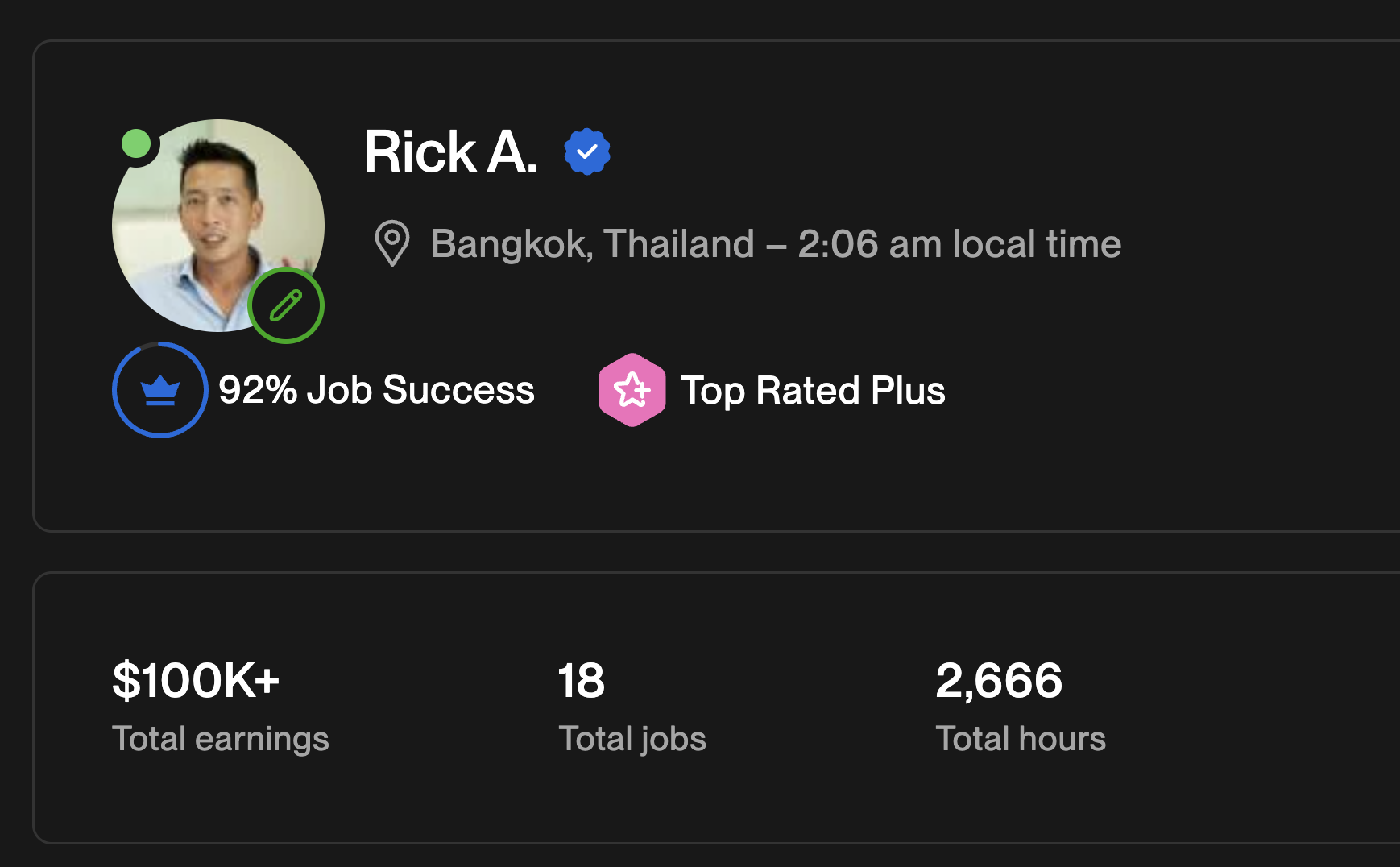
At the time of writing this:
- 92% Job Success Score
- 18 completed jobs
- 2,666 hours worked
That averages out to about $37.50/hour over that period — which shows you how much of the early phase is intentionally underpriced to build momentum.
Here are some of the reviews I've received:
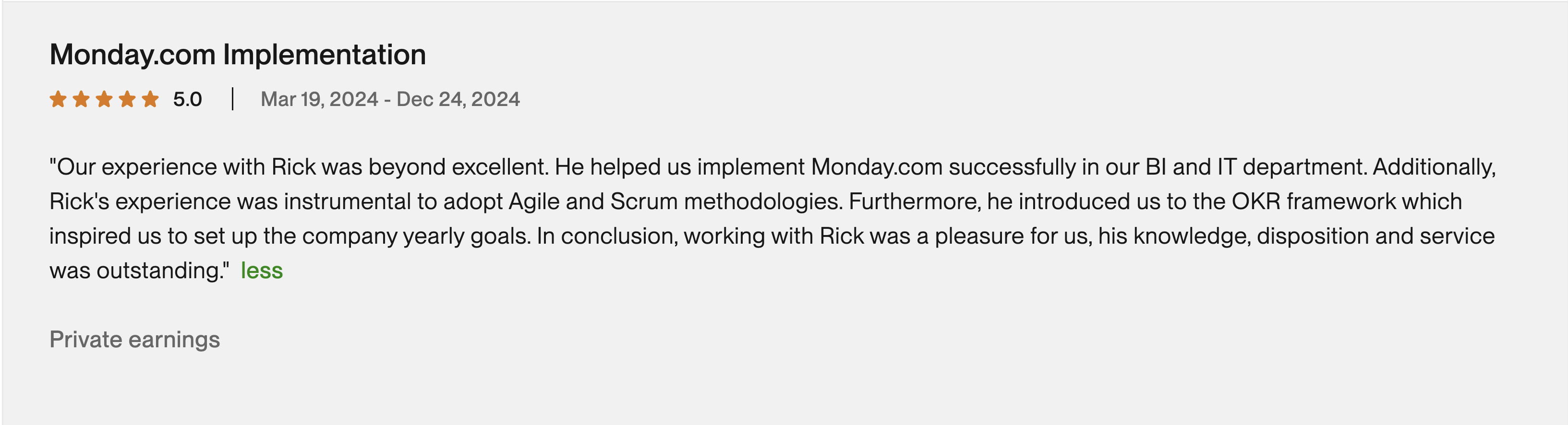
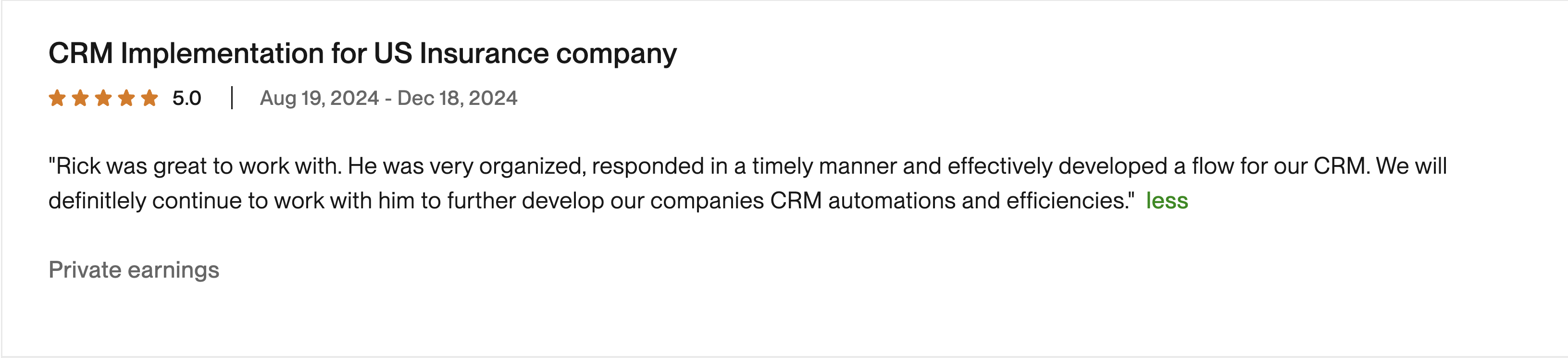

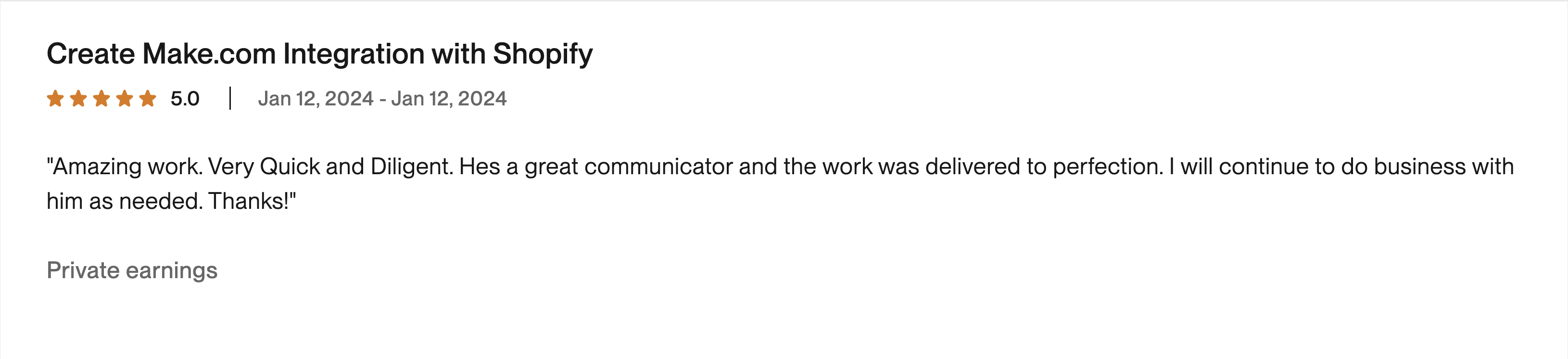
Upwork rewards consistency, responsiveness, and reliability. You don't win by being the best. You win by being the safest choice.
How Upwork actually works
To be successful on Upwork, you have to treat your profile like an asset:
- Build reviews deliberately
- Respond quickly
- Apply consistently
- Keep your metrics clean
Ideally, you'd automate parts of this.
But Upwork explicitly discourages automation and has mechanisms in place to detect it.
So in practice, success on Upwork is still very manual.
Once you become a Top Rated freelancer, though, the dynamic changes.
Clients start reaching out to you.
You stop competing on price and start competing on fit.
At that point, Upwork becomes a genuinely good source of high-quality, well-paying engagements.
Where it fits in my business now
Today, I mostly use Upwork and Toptal as backups.
My primary sources of clients now are:
- Referrals
- Direct relationships
- Other lead generation methods I'll write about separately
But Upwork played an important role.
It helped me:
- Rebuild credibility from zero
- Validate demand for Monday.com consulting
- Create a financial bridge while I built something more durable
And for that, I'm grateful for it.
Closing
Upwork is not easy.
It's competitive.
It's noisy.
It can be demoralizing early on.
But if you treat it like a system instead of a lottery ticket — if you're patient, deliberate, and consistent — it can work.
It worked for me.
If you have questions about any part of this, feel free to reach out. I try to answer everything I receive.