KnightLeap
The weekly operating system for an AI-native solo operator.
I run six ventures at once — a couple of my own products, a few client engagements, and the experiments I can't stop starting. Every project tool I tried assumed the opposite of my reality: one team, one product, forty tidy hours a week. I don't have one product. I have a portfolio, and one of me.
So I stopped looking for the right tool and built it. KnightLeap is the weekly operating system for an AI-native solo operator. It's real, it's deployed, and I plan my actual week in it every Monday. Here's the tour — not a feature list, just how I actually work.
It starts with seeing everything at once
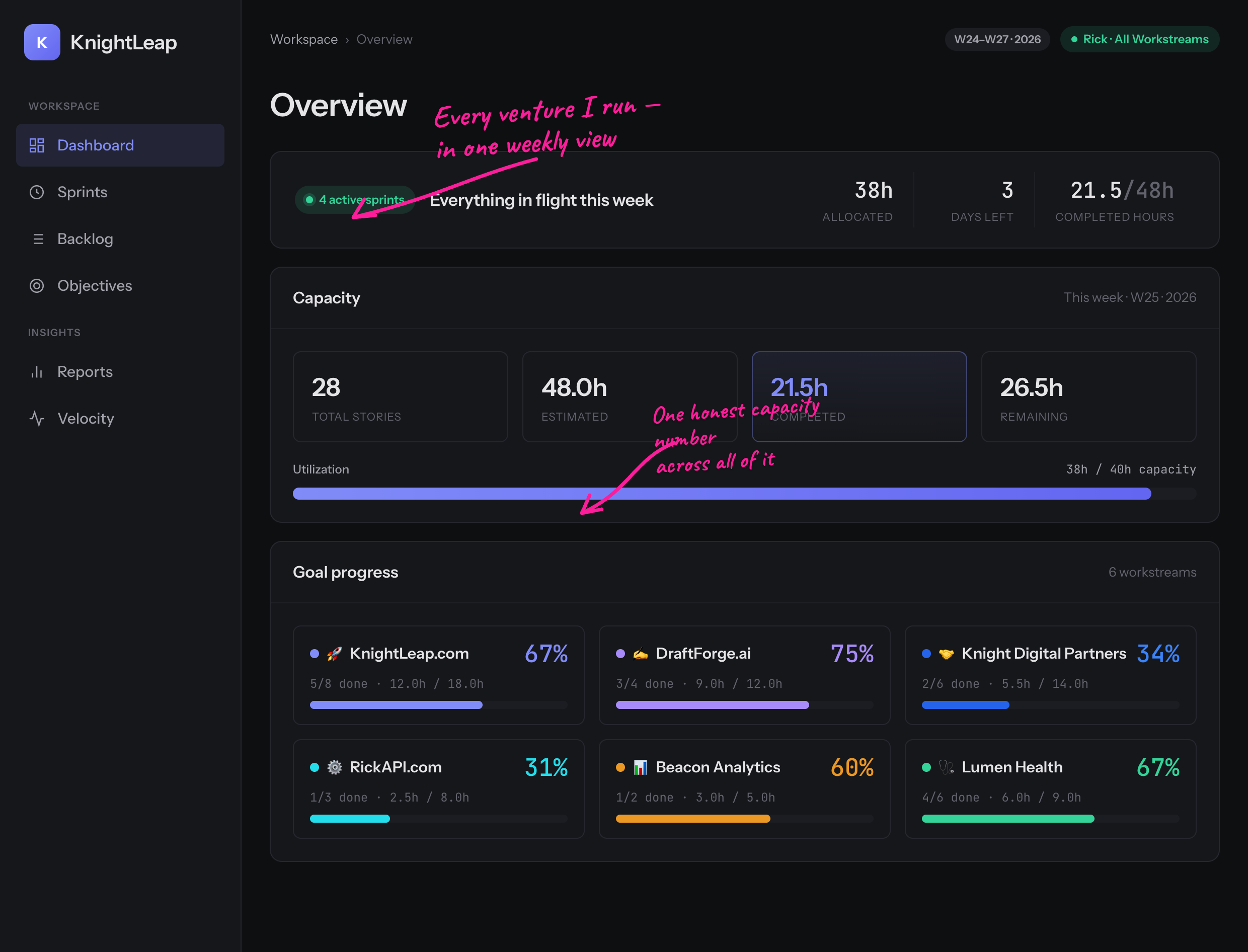
The first thing I needed was to stop context-switching between eight dashboards. One weekly view, every venture in flight, one honest number for how much I've actually got.
That "38h / 40h capacity" bar is the whole point. It doesn't care that I feel productive across six projects — it tells me the truth about how much I can actually take on this week. Seeing all of it in one place is the difference between running my portfolio and being run by it.
Planning without the busywork
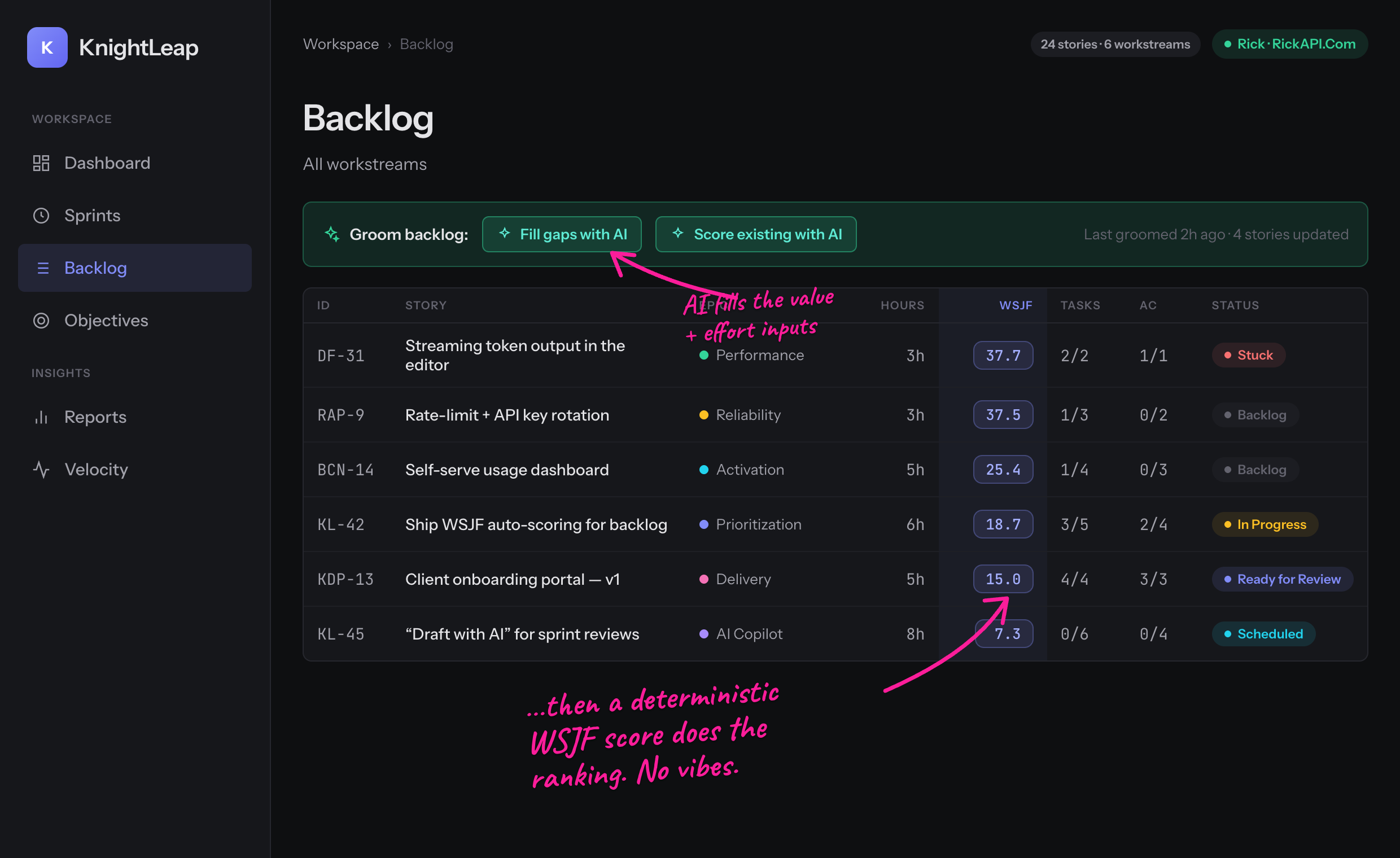
I hate grooming a backlog. Scoring every story for value and effort is exactly the kind of tedious judgment that eats a Sunday. So I let the AI do the grunt work — it reads my goals and fills in the value and effort inputs — and then a plain WSJF formula ranks the list for me.
I wanted help, not a magic 8-ball. The AI proposes; the math decides; I can see why every story sits where it does. Ten minutes on a Monday and my week is ordered by what actually matters.
And yes — I run it from my terminal
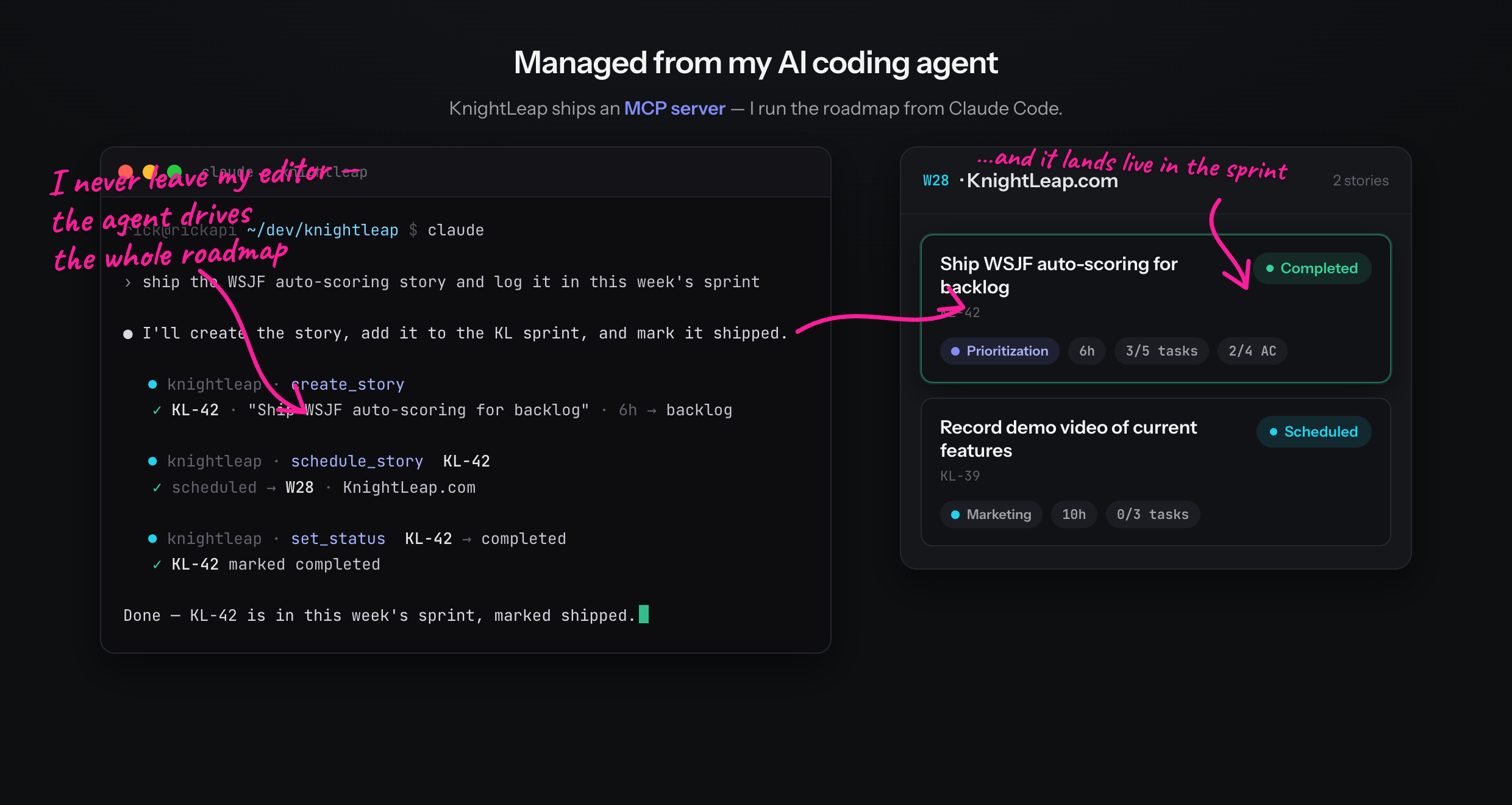
I'm a builder, so I live in my coding agent. It felt absurd to context-switch out of it just to log what I'd shipped. So I gave KnightLeap its own MCP server, and now I plan and update sprints by just… telling my agent.
"Ship the WSJF story and log it in this week's sprint" — and it's done, live in the app, without my hands leaving the keyboard. This is the part I'm proudest of. It's exactly the kind of AI-native workflow I want more of my own tools to have.
Keeping the big picture honest
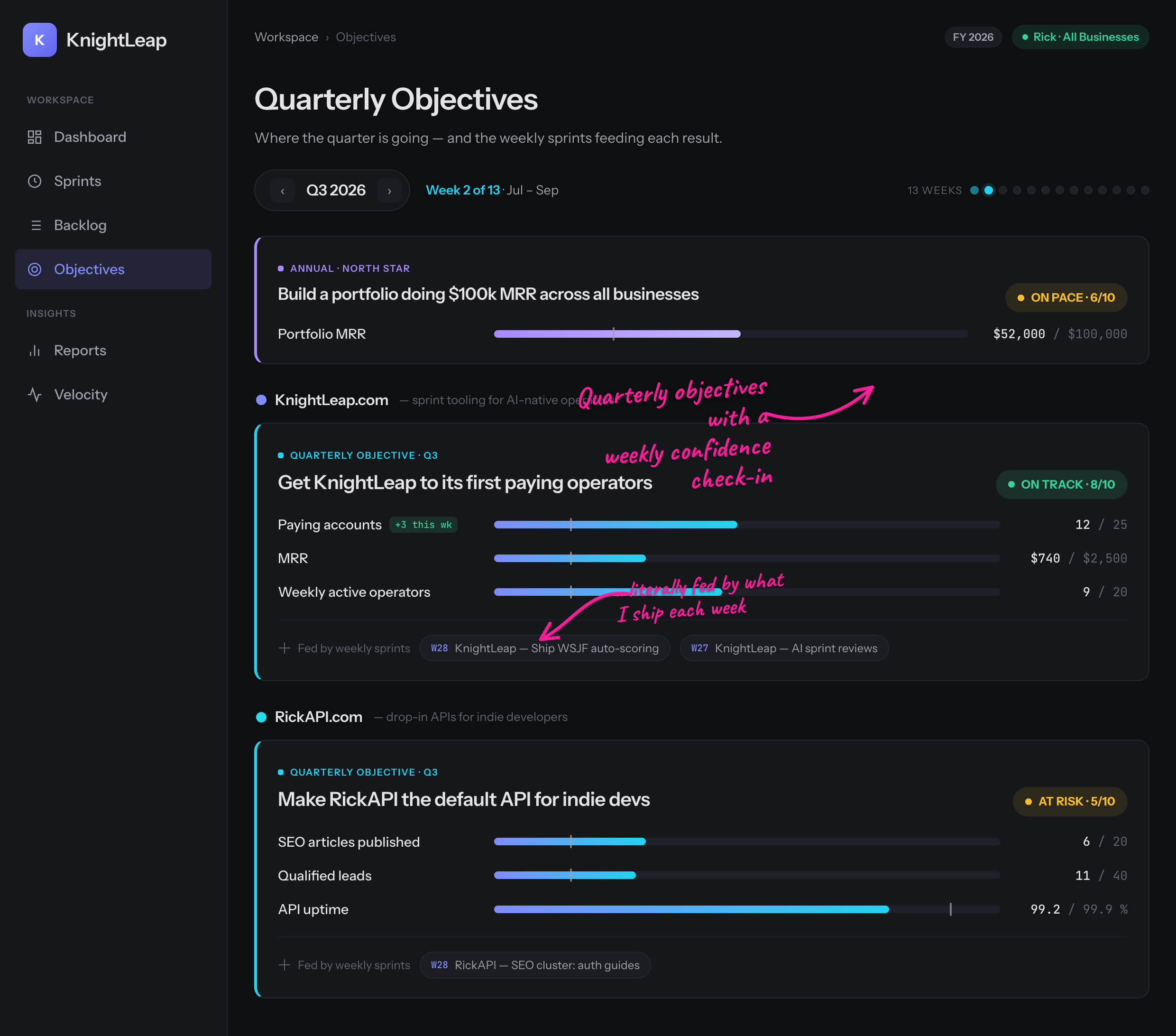
Weekly sprints are where the work happens, but I still need to know if the quarter is going anywhere. In KnightLeap my objectives are fed by the weeks — each key result moves because a specific sprint moved it.
I do a two-minute confidence check-in every week. It's the honesty mechanism that keeps me from mistaking motion for progress — "12 of 25 paying accounts, on track, 8 out of 10" beats a vague feeling that things are fine.
Here's the feature that changed how I work, and it's a little embarrassing. I built a report to compare what I planned, what I committed to, and what I actually finished. Then it showed me this:
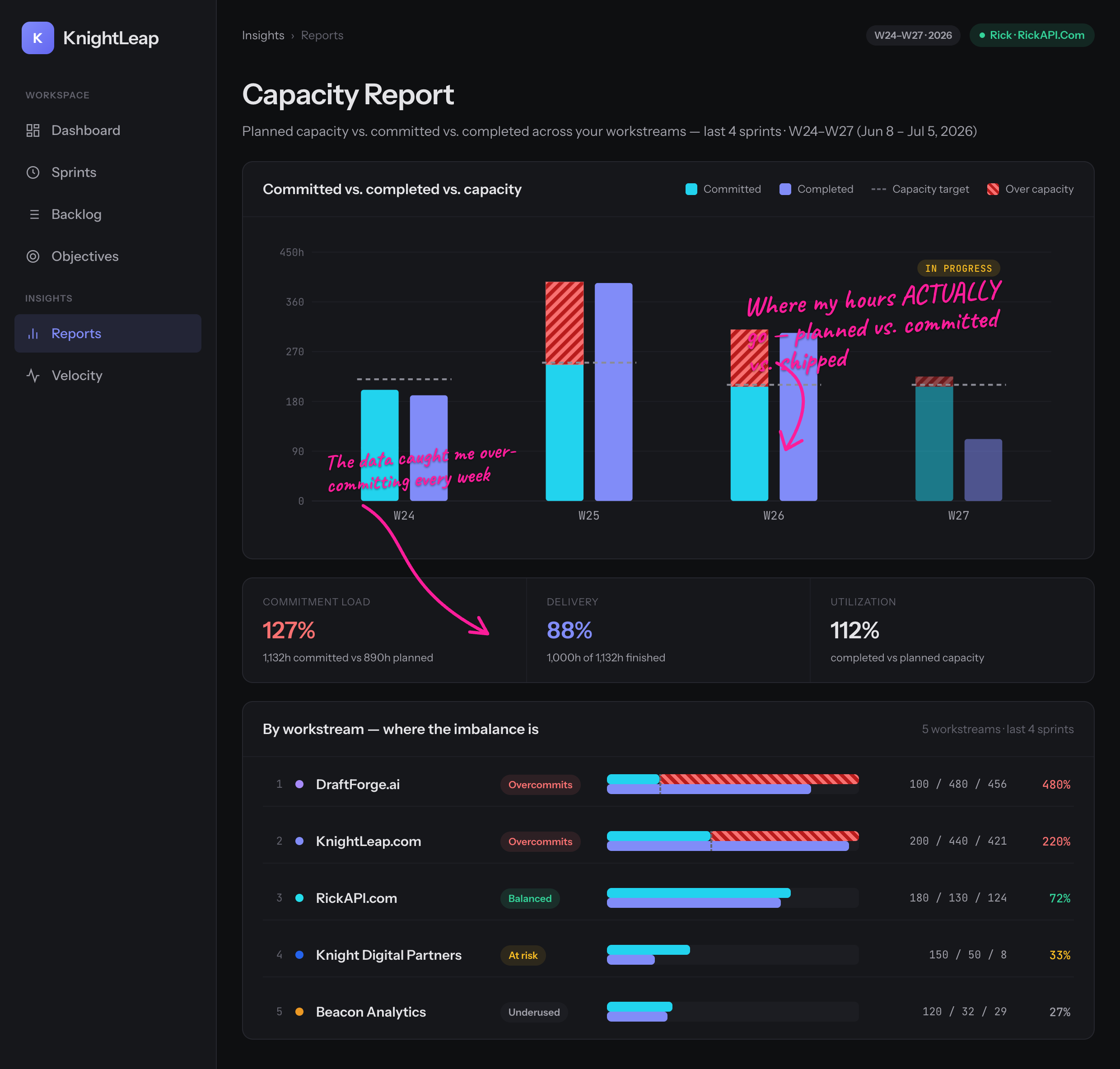
127% commitment load. Every single week I was signing up for a quarter more than I could do — and then wondering why I felt behind. No amount of willpower fixes a planning problem; only data does. This report is the reason I now say no earlier.
I'm still building KnightLeap, in the open, one weekly sprint at a time — and yes, those sprints are tracked inside KnightLeap. It's the most personal thing I've made, because it's shaped entirely around the strange, over-committed, multi-venture way I actually work.
Run your week like this.
KnightLeap is live and open. If the over-committed, multi-venture way of working sounds like your life too, come take a look.